VIETNAM COFFEE & TEA:
Art, culture, and the people

When coffee and tea are not just a drink....


Updated on: 8th of February, 2026. By Lai Ngoc Phuc (TropiBrew Founder).

"To understand the Vietnamese, you do not start with maps, it is better to start with something that appears everywhere in their daily life, like a cup." That is what I heard from a Finnish coffee shop owner, who had been to Vietnam several times before, when we were in an exhibition in Helsinki last year.

How the culture is condensed in just a cup?

In Vietnam, coffee and tea are not occasional, and even not being considered as something special. The Vietnamese lives are attached to agricultural activities, that means we are very close to the nature, and picking up some flowers, some herbs or some beans to make drink soon become a basic daily activity. But, to create a delicious cup, our ancestors developed some techniques, from choosing the species, farming, harvesting to processing the ingredients and brewing. After years, those techniques become so uniquely Vietnamese and inspired through generations. That is why people could realize and 'taste out' our culture through a tiny cup.

From the North to the South, from the West to the East, a cup of coffee, tea or herbal tea is not only appear in the morning, it also appears in the middle of the day as a refreshness or lately in the evening as a naturally medical liquid for digestion and mental treatment. For centuries, Vietnameses use their cup of drink to mark the time, create a pause during worktime and smooth out every conversations.

In fact, from a single cup, you could see the ingredients that has been processed with local techniques, then the ways Vietnamese brewing that drink, and how they drink it. Even the cup (and other tools) are being considered as an ingredient to make a delicious drink, there are being made from several materials, such as bamboo, wood, pottery and ceramic, but they will be explained carefully in another blogs. All of those mentioned elements are really heavily cutural based, and by understanding them, you will understand the unique culture in different areas in Vietnam.
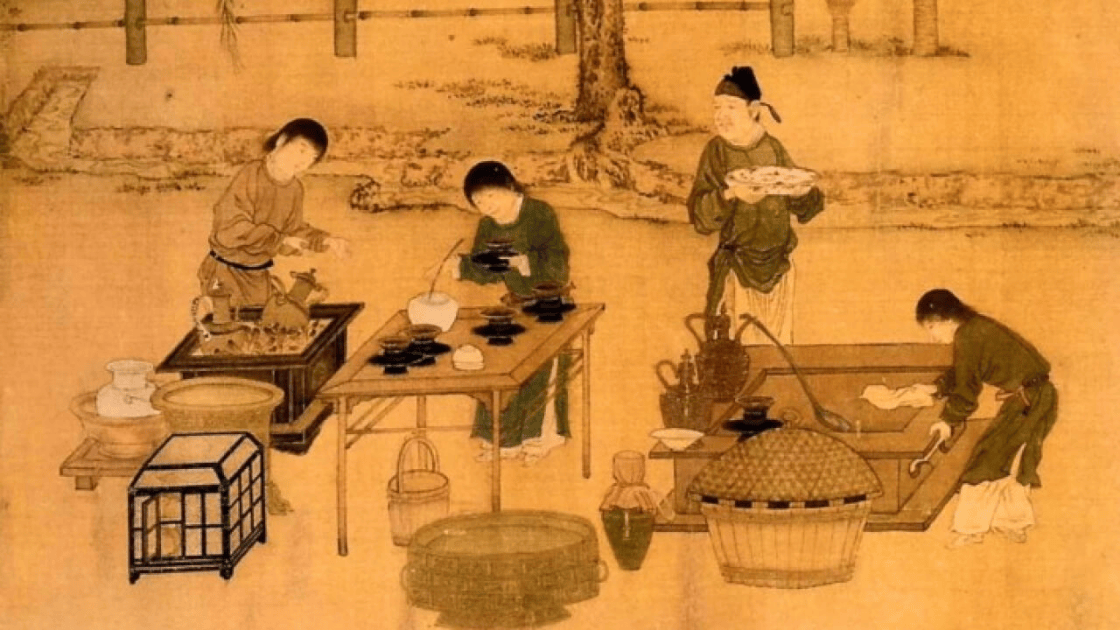
Coffee becomes a part of Vietnamese life.

In 1857, the first coffee was brought to Vietnam by the French missionaries. A small-scale plantation of Arabica was tested out before completely shifting into Robusta in the early 1900s. Since then, the central highlands of Vietnam (Buon Me Thuot), Dak Lak Province, has become the biggest coffee farming area in the whole country, due to its ideal climate, temperature, and soil. After the 1987 "Doi Moi" reforms, Vietnam grows into the world’s second-largest coffee exporter, specializing in commercial Robusta beans (around 89% of the country) and handling around 40% of Robusta beans in the global market in 2025.

Therefore, it could be said that Vietnam's coffee culture almost focuses on the central highlands areas and the Robusta beans. These areas in Vietnamese way are together called Tay Nguyen (including 5 provinces: Dak Lak, Lam Dong, Dak Nong, Gia Lai, Kon Tum). Of course there are also other farming regions in the Northside and the Midside, and there are Arabica or Liberica plantations as well but they are still in small-scale production, having their own uniqueness to become a specific niche, and very hard to describe as a representative for Vietnam's coffee culture.

For more details about the Robusta bean in Vietnam and how it has been developed from a well-known commercial option for instant coffee to a delicious Fine Robusta bean with complicated tasting notes, please check out in our post "Robusta: The Vietnamese favourite coffee bean".

Down below are different pictures with descriptions to form clear imaginations in how coffee join in Vietnamese daily life and some major things that represent the Vietnamese coffee culture.

banner_image

The Coffee "PHIN"

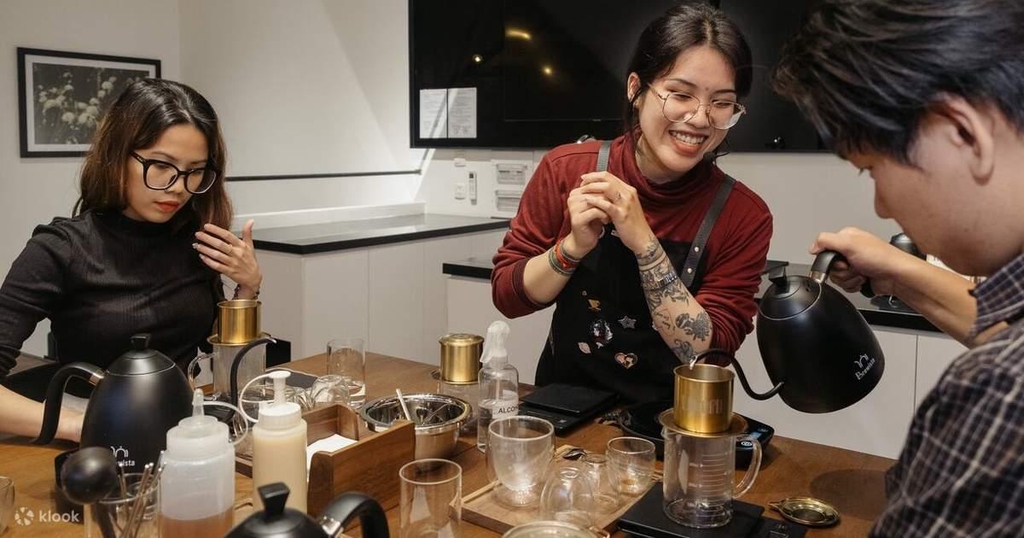
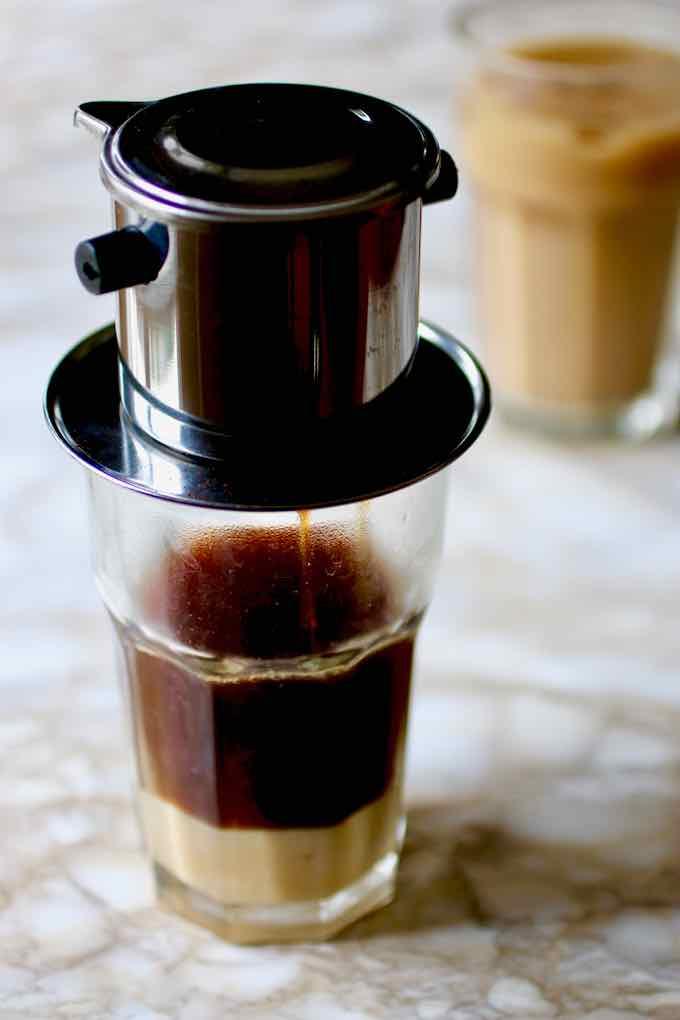
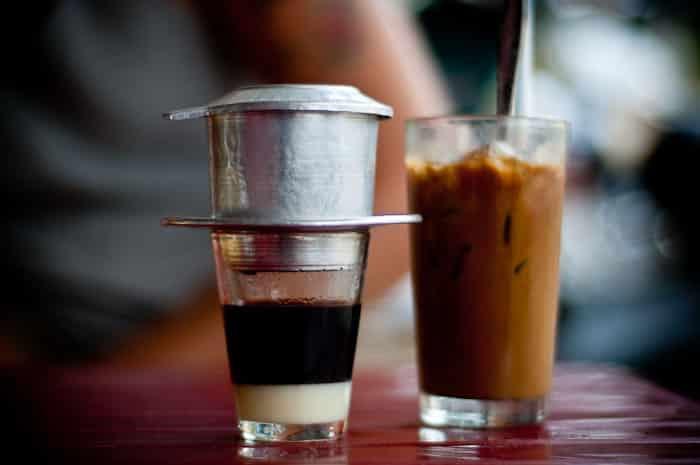
Honestly, the "Phin" (which is the Vietnamese way to called a coffee filter mimicking the word "filtre" from French) is the most unique symbol to international tourist. Just works a little bit similar to a French-press, the Phin uses natural gravity to push the coffee through a filtering basket (with bigger holes compared to normal espresso basket), therefore, separating the coffee ground and the coffee liquid.

banner_image

Special
"Cà Phê Sữa Đá"

After a few years of being inspired by the French, Vietnamese realized that black coffee from the Phin was quite strong and bitter to many people, therefore, the special "Ca Phe Sua Da" appeared. "Cà Phê" means coffee, "Sữa" means sweetened condensed milk and "Đá" is for ice.

Despite of being a delicious drink, it has a really sad story that represents the life of Vietnamese during the war with French.


Firstly, the coffee was so bitter with a thick body is because proper coffee beans were too expensive at that time, and the French also brought back to their country over 85% of the whole capacity, therefore, most of the coffee being drunk by people were either very bad beans or mixed up with soy beans and corns, then being roasted extremely dark to hide away all the bad flavours.


In addition, at the same time, fresh milk was only for wealthy family, basically not affordable to average workers. That is why our grandparents started using sweetened condensed milk, which is almost made out of sugar, as a replacement for fresh milk. And ice appeared just to make the drink became more refreshing and drinkable in hot weather.


The whole story does not mean that the Vietnamese is still sinking in the past, instead, it makes us remember about a certain timeline, the culture had been built during that time, and more respect in what we have had at the moment.

banner_image

Cà Phê Vợt:
The Mark of Time

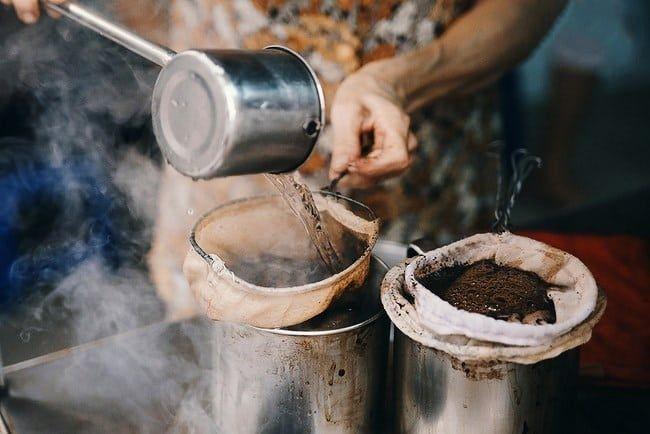
Cà Phê Vợt (Racket Coffee) is a distinctive brewing tradition originating from the Hoa community living in Saigon. It stands as an enduring value to the local culture. Each batch is not only flavourful, the faint scent of charcoal smoke from every batch is also memorable to many people.


To prepare this, the coffee ground is put in a cloth racket as a filter, then brewed over a charcoal stove and being lifted up when the coffee fully infuses.


In fact, its rarity and the spirit of preserving tradition make it become a living heritage, bringing a lot of international visitors to many traditional coffee spots in Saigon.

banner_image

Cà Phê Đạo:
The "Tao" of coffee

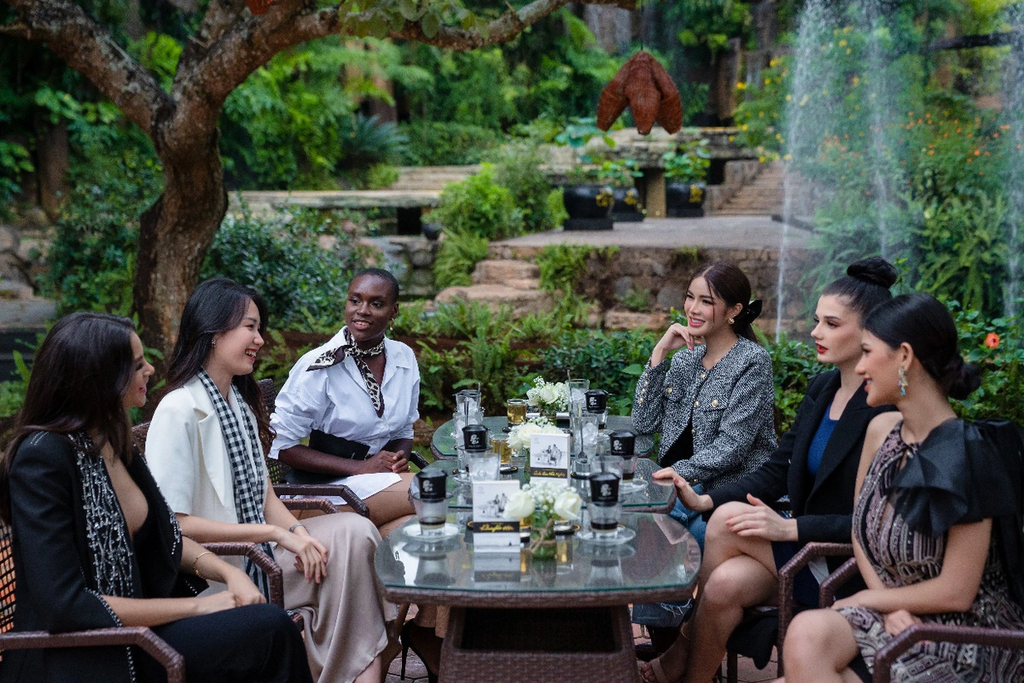
Dang Le Nguyen Vu is the founder of the most famous Vietnamese coffee brand and corporation, Trung Nguyen Legend. In 2023, he collaborates with Warner Bros. Discovery (WBD) to create the series of "The Tao of Coffee" in order to showcase Vietnam's culture and unique philosophy through coffee. His dream is to bring Vietnamese Coffee Tao to the same level of Chinese Gongfu Tea and Japanese Tea Tao.

In the series, WBD claims that Buon Me Thuot city has the best Robusta beans in the world and this city also becomes the "World's City of Coffee". According to them: "For successful Robusta cultivation, the temperature must be warm, there must be frequent rain, and the soil must be fertile and dry. Located 500 meters above sea level, with fertile volcanic soil, Buon Ma Thuot has the perfect conditions to produce high-quality Robusta."


And by having a premium ingredient on the table, Dang Le Nguyen Vu and his team start implementing historical value, unique local cultures, and brewing techniques to a thousand Trung Nguyen's Legend coffee stores. That level up the normal coffee to a representative symbol and art, attracting international tourists with the understanding of "Coffee Tao", coffee festivals, coffee museums, delicious organic products from the local and even experience the daily life of a coffee farmer.


This is a milestone to Vietnam's coffee culture, opening several new perspectives, analyzing different aspects of enjoying and farming coffee and make it serious to the world.

banner_image

Coffee as an affordably convenient option

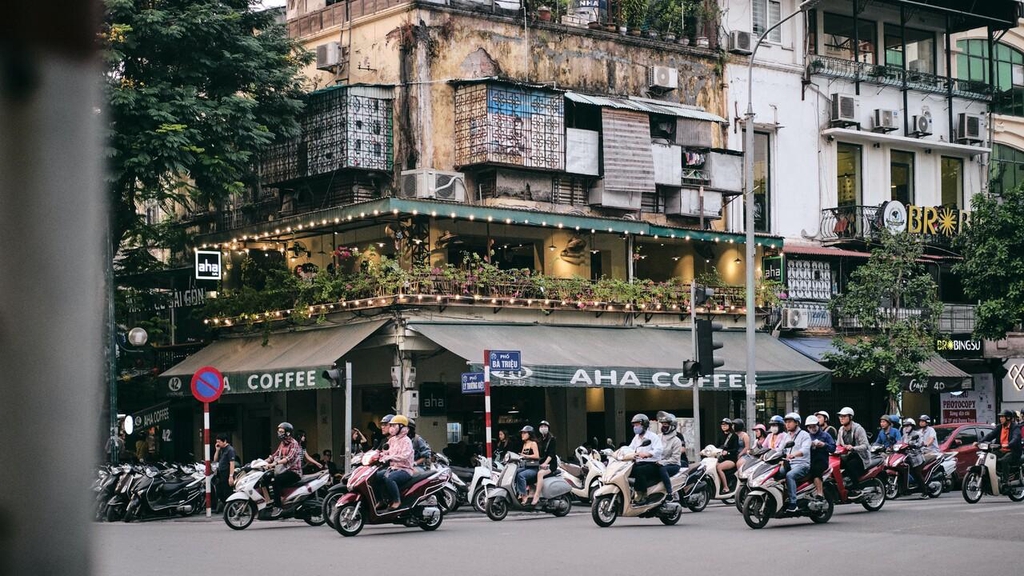
Coffee lives together with the local not only because of its popularity in residental areas but also as one of the most affordable drink for everyone.


In fact, there are more than 500 000 coffee shops around Vietnam in 2024 according to DAN TRI Newspaper. And a cup of coffee varies from 20.000 VND to 90.000 VND (approx. 0.65€ to 3€) depending on the quality and locations.

Shopping Cart

    Your cart is empty